Penetration time and wearing time are generally not the same. What is the difference and what is the maximum length of time protective gloves should be worn?
Penetration time
Section 8.2.2 of the safety data sheets contains information on skin protection, particularly in relation to protective gloves. Glove material, material strength and penetration time form part of this information. The information may contain a protection index instead of the penetration time. The protection index is directly ascribable to a particular penetration time.
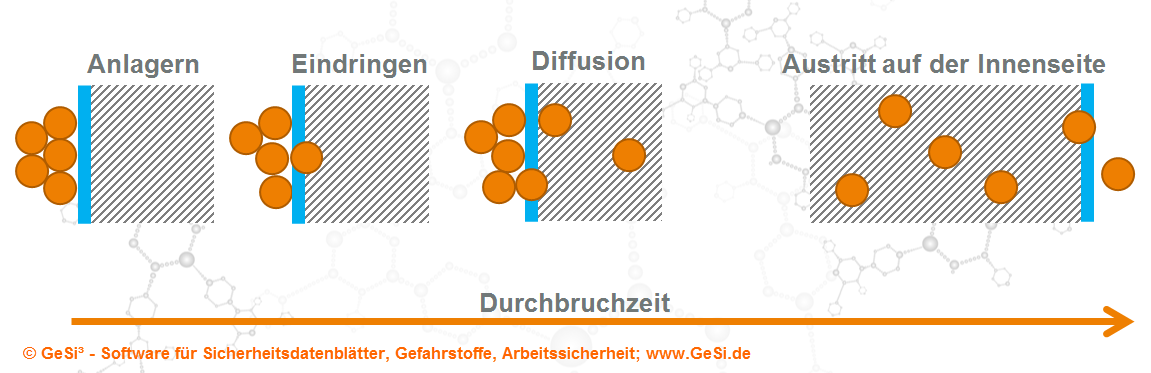
The penetration time is described in standard DIN EN 374-1, while the corresponding measurement methodology is described in DIN EN 16523-1. Penetration time is the period of time from the application of a test chemical to the glove material to the time of the chemical leaking out on the other side. The observable effect is referred to as permeation and takes place at molecular level.
The standardised measurement of the penetration time is performed at a fixed measuring temperature (22-24 °C). Permeation is however dependent on temperature. The warmer it is, the sooner the chemicals will penetrate the gloves.
Maximum wearing time
When wearing protective gloves, the temperature will definitely exceed 23 °C due to skin contact alone. The Technical Rules for Hazardous Substances 401 (TRGS 401) recommend that the penetration time test for the wearing time is performed at 33 °C. Alternatively, it is recommended to use a third of the stated penetration time in the safety data sheet.
The liquid tightness of the glove is an additional influencing factor, as the activity would then be ascribed to working in humid conditions.
Sources:
Technical Rules for Hazardous Substances 401, June 2008 edition;
DIN EN 374-1; DIN EN 16523-1